
Emergency water removal in Frisco, TX
Standing water in a newer, tightly sealed Frisco house has nowhere to evaporate to, so getting it out fast matters more than usual.
Call Now(972) 449-446624/7 emergency line. Free estimates from local pros.
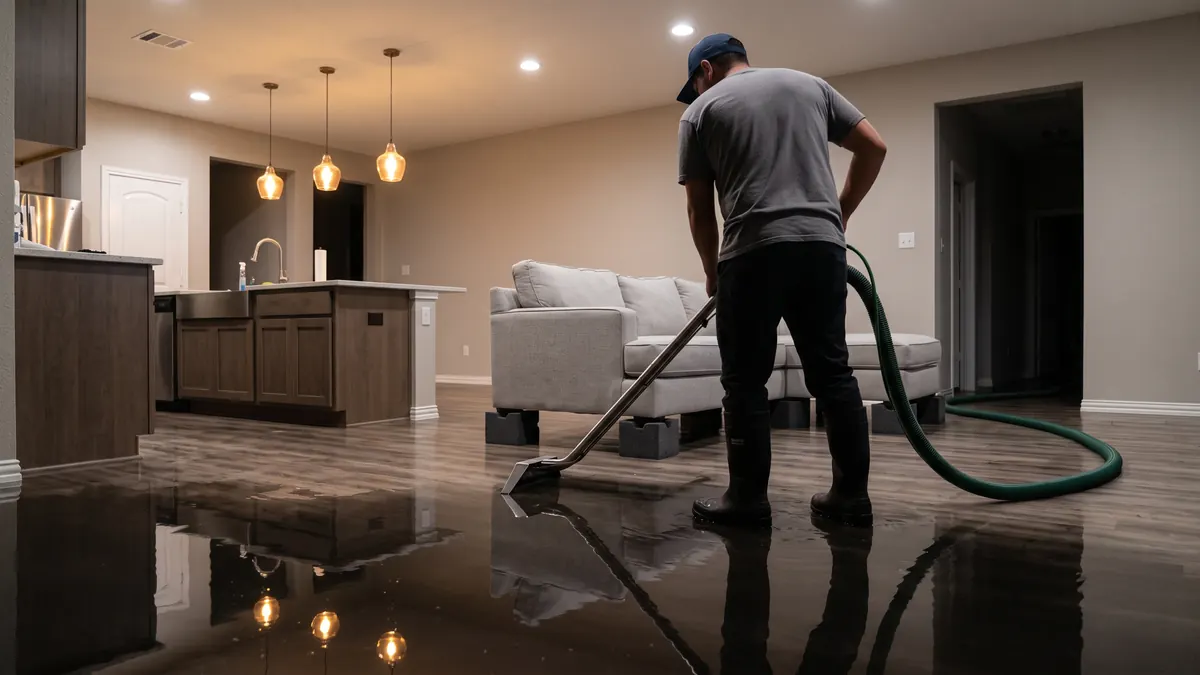
A newer Frisco house is built tight, and that’s usually the point: good insulation, good windows, lower bills. It’s also why standing water is a bigger problem here than in an older, drafty house. Emergency water removal is the fast pull, getting standing water off your floors and out of what it’s touching before it works in any deeper.
What the first hour does to your floor
Water sitting on a hard floor is still mostly a surface problem in the first hour. Wood floors, baseboards, and the bottom edge of drywall start pulling water upward almost right away, though, and once that starts, drying takes real equipment, not a fan running overnight. Carpet and its pad are usually the first real casualty: pad holds onto water long after the carpet on top feels dry to the touch. Furniture legs and cardboard boxes sitting in the wet are next, often before anyone thinks to check them.
Call, then use the minutes before anyone arrives
Call the number, and put the wait to work. Shut off the water at the source if it’s obvious, a supply line, a toilet, an appliance hose. Move anything you can lift off the floor: boxes, rugs, furniture legs standing in water. Take a few photos of the water and whatever it’s already touched before you start moving things, since that’s the record your insurer will want later.
Why a borrowed carpet cleaner doesn’t finish the job
Borrow a neighbor’s carpet cleaner, or pull your own out of the closet, and it’ll pick up the water sitting on top of the carpet fibers. It won’t touch the padding underneath, the subfloor below that, or the humidity that’s already moved into your walls and the room’s air. Water damage repair fills in what happens to material that stayed wet past what a home machine was ever built to reach.
What pros actually do first
Extraction comes first, pulling standing water out fast with equipment stronger than anything sold at a hardware store. Moisture mapping comes next, using meters to find how much farther the water reached than the stain suggests: under plank flooring, into the toe space beneath cabinets, up the back side of drywall. Drying equipment gets matched to that spread instead of guessed at. The what-to-do guide sets out the fuller first-day list, from shutoff to the first call to your insurer, and the drying-time guide measures how many days the equipment usually stays, material by material.
A sealed house is also a sealed trap
An energy-efficient house holds onto water the same way it holds onto heat. Good windows and tight doors mean humidity has nowhere to go once water gets loose inside. In an older, drafty house, some of that moisture would work its way out on its own, slowly. In a newer Frisco house, it just sits there until equipment does the job the house can’t do on its own. Extraction gets the water out. What comes after it, the fans and the dehumidifiers, is the ventilation the house can’t provide anymore.
Common questions
Is anyone actually there if I call before sunrise?
Yes. The line is answered around the clock, including the early hours when most water problems seem to happen. Calling right away, instead of waiting until a normal hour, is what actually helps here.
Once extraction's done, how much longer until things are actually dry?
It depends on how much got wet and how far the water traveled before anyone pulled it out. A single wet closet dries faster than an open floor plan with soaked baseboards throughout. The company that comes out can give you a real range once they've measured the damage, not just guessed at it.
Do I need to find somewhere else to stay while this dries out?
Usually not, but it depends on what got wet and how bad it is. Most households stay put while fans and dehumidifiers run. A situation involving a lot of standing water, exposed subfloor, or safety hazards like exposed wiring is a different question, and worth asking the company directly.
Should I cut the power before doing anything else?
If standing water sits anywhere near an outlet, a power strip, or anything plugged in, yes, cut power to that area at the breaker before you go back in. If the water hasn't reached anything electrical, shutting off the water source usually matters more first.
Related pages
Appliance leak cleanup
Upstairs, a water heater or laundry line fails quietly. Downstairs, it shows up on the ceiling.
Learn more →Burst Pipe Cleanup
A burst pipe in a newer Frisco home is still a burst pipe. Here's why it happens and what to do once the water's off.
Learn more →Ceiling water damage
The ceiling shows where water landed. It rarely shows where the leak started.
Learn more →Commercial water damage
A house can sit half-dry for a week. A business usually can't.
Learn more →Talk to a local pro now
We answer 24/7. One call gets a Frisco crew moving on your water damage, with a free estimate and help with your insurance claim.
Call Now(972) 449-4466Free estimates. No obligation to hire.