
What to do after water damage
Eight steps that move between stopping the water and building the paperwork your insurer will ask for later.
Call Now(972) 449-446624/7 emergency line. Free estimates from local pros.
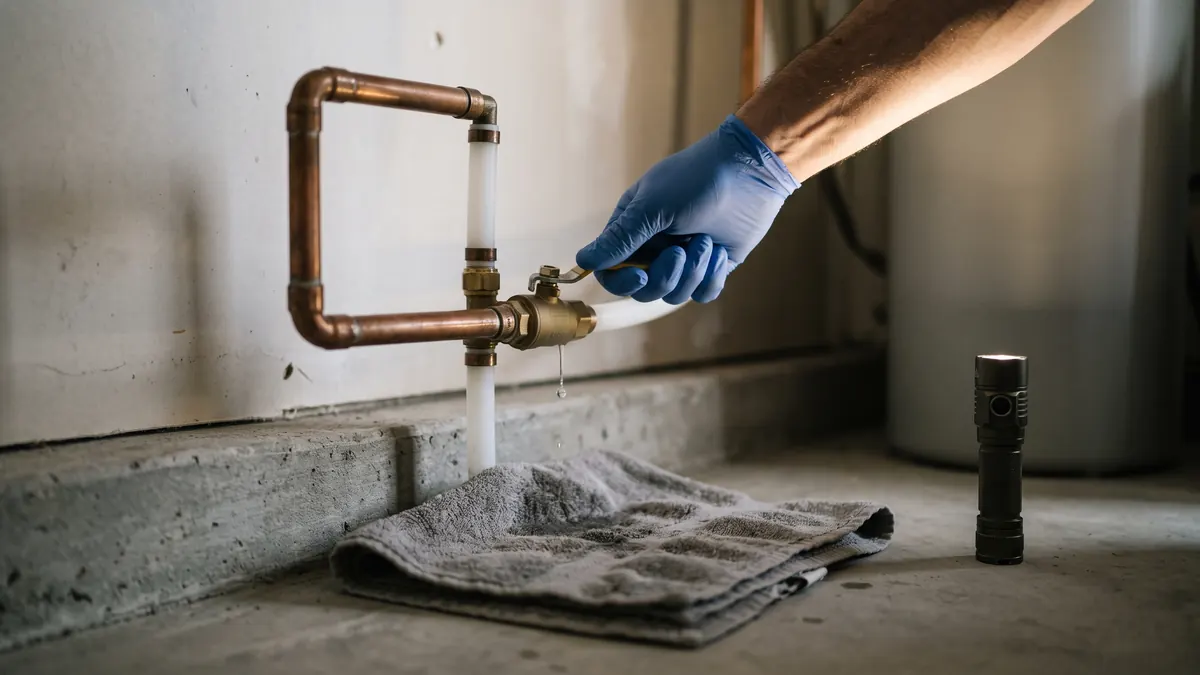
Water damage forces two jobs on you at once: stopping the water and drying the house, and building a record your insurer will ask for. The steps below move back and forth between the two, roughly in the order each one needs attention, from the first hour through the first week.
1. Cut the water at its source
Find the valve feeding whatever failed, or the main line if you can’t tell which fixture is to blame. In most Frisco houses, that valve sits low near the foundation, often tucked into the front flower bed. Can’t find it? Most of the city routes that question to Public Works or the myFRISCO app. A strip of far-west neighborhoods along the Denton County line, Frisco Ranch, The Preserve, and Frisco Hills, run on a separate system altogether, Frisco West WCID rather than the city’s own department, so know which side of that line your address sits on before you call anyone.
2. Get pictures before you touch anything
Wide shots of every wet room first, then closer ones of the source and anything already ruined. Do this before furniture gets dragged outside or a single towel hits the floor. A phone camera is plenty. Nobody needs a professional shot, just a dated one.
3. Kill power to anything wet
Water and outlets don’t mix. Cut power at the breaker for any room where standing water sits close to a plug, a lamp, or an appliance. Don’t reach for a switch standing in the wet yourself; go to the breaker box instead. Not sure which breaker feeds which room? Cutting the whole panel is the safer guess.
4. Tell your insurer the same day
A short call is enough to start: what happened, roughly when, which rooms got wet. You don’t need every detail sorted out yet. For what your policy actually promises once you file, the homeowners insurance guide tallies the difference between a sudden loss and one that built up slowly, and that difference matters more than almost anything else in a claim.
5. Get what you can up off the floor
Furniture legs, boxes, rugs, anything sitting in or near the water. Lift what’s light enough to move safely, and don’t strain yourself over anything heavy; a couch that stays wet another hour isn’t worth an injury. Open a window or run a fan if the air’s still, just to get some movement going while you wait on real equipment.
6. Save every receipt from here forward
A fan bought at the hardware store, a hotel room if the house is unlivable, a plumber’s invoice, all of it. Your policy expects you to do something to keep the damage from spreading, not just wait for someone else to. Receipts are how you prove you did.
7. Get air moving before materials sit too long
The drying time guide paces out how each material behind this dries at its own speed, but the short version matters here too: the sooner air starts moving across wet surfaces, the better your odds. Materials that stay wet and closed up work against you fast.
8. Bring in help once a fan alone won’t cut it
Standing water deeper than an inch or two, or a room where you can hear water but can’t see where it settled, is past what open windows and a box fan can handle. The emergency water removal page sequences what happens once real extraction and drying equipment take over. From there, both jobs you started, drying the house and building the file, keep running side by side until the claim closes.
Neither job finishes without the other
Dry a house perfectly and skip the paperwork, and a claim still stalls on missing proof. Build a spotless file and never touch a fan, and mold takes the decision out of your hands regardless of what the insurer says. The steps above work because you run both at once, not because you finish one before starting the other.
Common questions
Should a small, contained leak even go through insurance?
It depends on the deductible and what the fix actually costs. A leak that runs less than your deductible usually isn't worth filing, since nothing gets paid out and it can still sit on your claims history. Anything past that is worth at least a call to ask.
In a rental, whose job is step one, yours or the landlord's?
Stopping the water yourself, if you can safely reach the valve, is fine no matter who owns the place. Reporting it and fixing the actual source is typically the landlord's job once you've told them. Check your lease for the exact wording, since it varies property to property.
Is it all right to keep sleeping there while drying equipment runs?
Often, yes, especially when the damage is limited to one room and the equipment is just fans and a dehumidifier. A house with sewage involved, exposed wiring, or a large area still wet is a different call. When in doubt, ask whoever set up the drying whether your specific situation is fine to stay in.
Related pages
AC Drain Overflow
A clogged condensate line follows the same pattern every cooling season, long before it ever shows up as a stain on the ceiling.
Learn more →Drying Time
Two water damage jobs, same city, decided by how much got wet and how fast drying started, not by luck.
Learn more →Frozen pipes
What a house needs at each stage of a freeze, from the first warning on the forecast to the thaw that shows the damage.
Learn more →Homeowners insurance
A walk through your own policy, section by section, to see where a water loss actually lands.
Learn more →Talk to a local pro now
We answer 24/7. One call gets a Frisco crew moving on your water damage, with a free estimate and help with your insurance claim.
Call Now(972) 449-4466Free estimates. No obligation to hire.